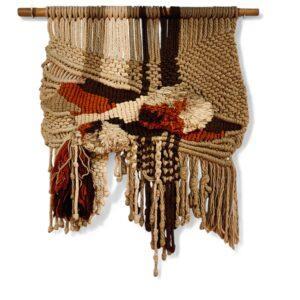
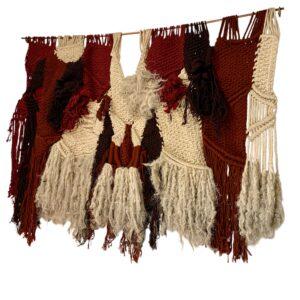
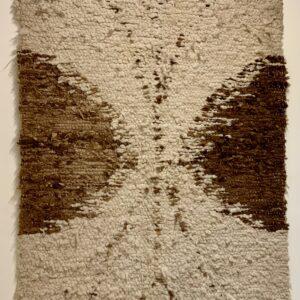
Indeed, the sixties were pivotal in the revival of tapestry, with two trends: – That of tapestries commissioned by the Manufactures nationales des Gobelins or de Beauvais from major contemporary artists, and that of the avant-garde in the tradition that dates back to the creation of the Manufactures in the 17th century.Among the many artists involved were Geneviève Asse, Pierrette Bloch, Pierre Buraglio, Alexander Calder, Edouardo Chilida, Le Corbusier, Sonia Delaunay, Julije Kniffer, Aurélie Nemours, Gustave Singier, Raoul Ubac, Victor Vasarely and Vieira Da Silva. – At the same time, the “Nouvelle Tapisserie” movement emerged, revealed to the public in 1962 at the first International Tapestry Biennial in Lausanne. This movement was characterized by a renewal of techniques, blending traditional European and Amerindian inspirations, and the use of new materials. Tapestries became veritable textile sculptures. From being two-dimensional for centuries, tapestries became three-dimensional, with weaving freed from traditional techniques. Tapestry was traditional, two-dimensional and ultra-technical. Now it’s dusted off and subversive! Artists representing this movement include Josep Grau-Garriga, Gleb, Jagoda Buic, Olga De Amaral, Alfred Manessier. Personalities with different sensibilities and techniques, but who all have one thing in common: they have left their mark on tapestry art over the last fifty years…